

Speaking of sliding plates… I think facebook really has figured out I’m a snowboarder from Europe because I got an ad for this board that only comes with a (heavily cambered) sliding isolation plate
https://doubledecksnowboards.com
From the marketing it seems a lot more freestyle oriented compared to anything you’ve talked about here, but it also seems like an interesting concept with the plate being cambered…
Dreaming about soft snow

Yeah I’ve been getting spammed with that again as well. They actually started some advertising a couple years ago with Terje. Unfortunately it didn’t really seem like the marketing team really understood it, so it came off as more of a school project. It’ll be interesting to see how it works out.
Big White, BC, Canada

I want to ride it!
I'm just slaying...
I would be quite interested in trying it, but looking at the amount of camber on the plate I'm guessing it will have to flex quite a bit to offset the quite aggressive camber so you're not getting outward canting on the bindings, just look at the outward angle here:
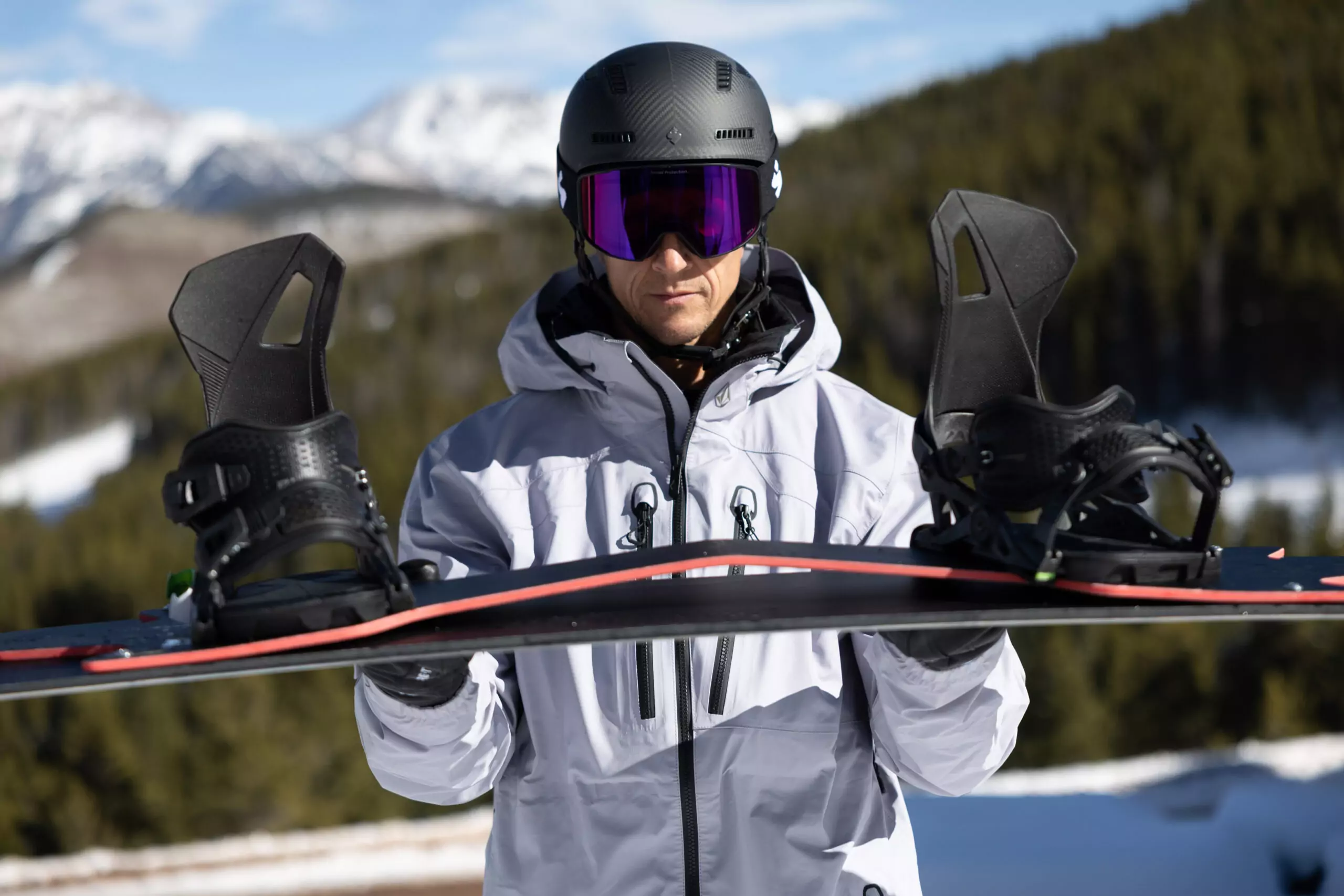
And just speculating here, but it feels like that would give a similar springboard feel that I get on my cambered bamboo longboard. Kind of like a trampoline effect when you're riding it. I wonder how that translates to snowboarding. It could be tons of fun. It could also be super weird and induce instability. They're also touting a large amount of torsional flex in the board, but it's supposedly offset by the plate to somehow still make it easy to carve.
The fact that they're saying it's a great beginner and expert board makes me kinda skeptical, but like @board-doctor said... marketing may not know what they're doing...
They're doing an all or nothing Kickstarter, and want to get €10k, and they're halfway there in 3 days so maybe they end up producing something.
Dreaming about soft snow
it will have to flex quite a bit to offset the quite aggressive camber so you're not getting outward canting on the bindings
Good point! That is a ton of outward canting. Generally, these plates don't flex much at all so the stance could be very awkward. Maybe they'll fix that in V2.
I'm just slaying...
@wild-cherry I watched one of their promo video and the plate looked very flexy actually, but it was a very short shot so hard to say. But it really looked to be a similar flex as I have in my springy bamboo longboard like I guessed above. I think the plate is also made from wood but I may have misunderstood that…
Dreaming about soft snow

A Japanese shop recently uploaded an explanation and riding video.
According to them, the board's flex is roughly equivalent to that of the BURTON CUSTOM. Interestingly, this board system features a unique design where, out of the four front mounting points, the two rear ones are fixed and the others are allowed to slide. This is particularly noteworthy because in most floating plate systems, the rear points are typically the ones fixed.
In the video, they explained that the rear sliding mechanism is intended to absorb impact, such as from landings after jumps. However, it's unclear if that’s the actual intent of the manufacturer.
I think the concept is very intriguing. Years ago, ATOMIC skis featured a system called "D2", where the ski itself was made softer than usual, and a carbon plate was mounted on top. The idea was to allow the ski to remain soft and easy to maneuver at low speeds, while the carbon layer would engage at higher speeds to provide more support—improving control across all speed ranges.
If a similar evolved system were to appear in snowboarding, it could be very exciting. The Double Deck system might fall somewhere between a traditional floating plate and the D2 system we’re imagining.
What godawful conditions they rode in... Almost more mud than snow 😂
Here we can see how much the plate decambers when you stand on it. They do mention the outward cant when riding up the lift saying it feels funky. But they seem impressed with how it handled the crap snow (I turned on auto captioning and auto translate so bear that in mind!)
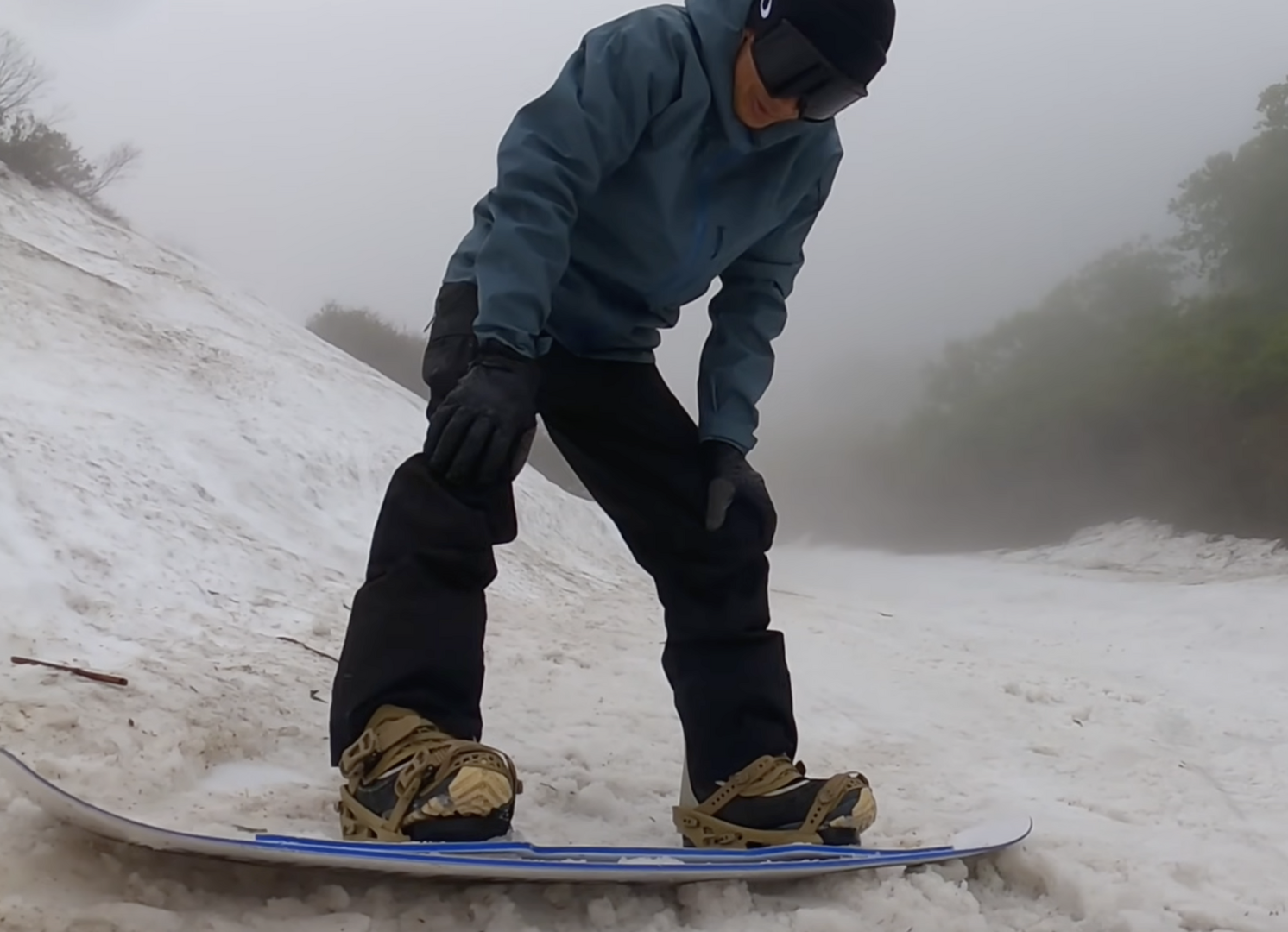
I think they're also demoing what @spar_snb said about the second pairs of bolts being the one that are attaching the plate solidly to the board with the rest being allowed to slide. They seem to be hinting that it has to do with allowing for the nose to flex more.. The auto captioning didn't really work here so I'm just going off of vibes and what they were doing with the board.
Dreaming about soft snow
It looks like they went riding on Mt. Gassan on May 29th. I also live in Japan, but depending on the region, while it can be nearly 30°C in the city, you can still ride on this mountain from April through July—pretty crazy, right? 😂
The only people who make the effort to go are either mogul-training addicts or those who just can’t accept the season being over. Of course, there's no grooming at all!
Given those conditions, the review video isn’t the most informative, but they did mention that the top plate might also contain wood. If that’s the case, the plate itself is probably softer than most plates designed specifically for carving. A soft floating plate probably doesn’t contribute much to turn acceleration, but it could be useful for cruising all day—as long as the weight doesn’t wear you out on the lift...
I’ve personally ridden both the Boiller and the JJA custom freestyle floating plate, and my conclusion was that “it’s useful to have as one of your options.” It’s true that floating plates increase grip on icy surfaces, absorb impact and chatter, and improve comfort by allowing consistent board control regardless of snow conditions.
On the other hand, the added weight on a freestyle board can cause significant fatigue, especially on the lift or during anything outside of carving. I also feel that floating plates struggle with sudden movements—like having to quickly dodge a skier who suddenly cuts in front of you.
When weighing these pros and cons, I think whether a floating plate is useful or not really depends on the rider. You just have to try it for yourself. That said, the biggest drawback, in my opinion, is that it shortens the lifespan of your boots.
I’d especially like to hear your thoughts,@wild-cherry.
I think our board preferences are very similar, and if I’m not mistaken, you’ve also ridden the JJA floating plate.
Yeah... I agree with @spar_snb overall, he has way more experience than me on these too. Plates were becoming quite popular amongst alpine riders (hardbooters) for a while about 10-15 years ago but the hype seems to have subsided and only a few still use them.
I only rode that plate for one day and that's the only time I've ever ridden any plate. It definitely did what it was supposed to do. It was an icy day (well, icy for Revelstoke) and the setup performed beautifully. It felt a little weird at first but I looked back at my tracks and saw how they were almost perfect. The board just settled into it's groove and absorbed all the little imperfections in the snow. I could hear the ice but I couldn't feel it as I usually would. This setup made the board do the work for me and instantly adapt to the variable conditions.
It definitely added grip and eased the pressure on my body so it was less fatiguing. Smooth ride for sure, as advertised.
But... There are reasons why I only rode it for one day... Probably it would have started to feel more comfortable after more days, but initially I felt a disconnection from my board reminiscent of hardbooting. I didn't love that feeling, though again I might have started to appreciate it if I had taken more time to get used to it. At one point this thought occurred to me: "If I'm gonna be so high off my board and without that organic, connected feeling that I love, then I might as well be riding hardboots, and then the board could be way narrower and the whole setup could be way lighter."
Ultimately though, this experience led to an important discovery and the real reason why I only rode it once: I could not perform a 360 spiral turn on this setup. I tried a few times and the realization was that I need to physically bend the board with my feet to bring the tail radius tight enough to finish a spiral with momentum. The plate did not allow me to affect the board this way and so I couldn't carve past 270 degrees. Before this day I hadn't realized how forcefully I was bending my boards on these spirals, I thought I was just leaning back but I was actually pulling up on the front foot, pretty hard too. This inability to perform my signature move left me feeling unsatisfied at the end of each run with nothing to do with my momentum except burn it up with friction and snow displacement. Boring. So the next day I removed the plate.
So who would appreciate a plate setup? Certain racers for sure, who might be losing valuable speed every time their board chatters or slarves through icy patches and ruts. The plate setup adapts instantly, way faster than any human could, maintaining the carve and the speed, and without tossing the rider around. And I think ageing or out-of-shape freecarvers who aren't taking air or riding super aggressively, but want a smooth carving experience that doesn't beat them up. Also riders who carve a lot of ice would definitely benefit from the added grip and the more relaxing ride.
Some riders swear by these plates and can't be convinced to ride without them. They seem to claim a smoothness to the carve and that the setup does a lot of the work for them, enabling them to ride more days and more runs per day. I can see that attraction, but for me the spiral is just such an essential part of my riding that I won't give it up even if the rest of the run might feel better on a plate setup.
I'm just slaying...
Some riders swear by these plates and can't be convinced to ride without them. They seem to claim a smoothness to the carve and that the setup does a lot of the work for them, enabling them to ride more days and more runs per day. I can see that attraction, but for me the spiral is just such an essential part of my riding that I won't give it up even if the rest of the run might feel better on a plate setup.
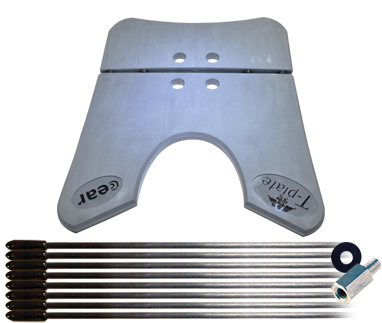
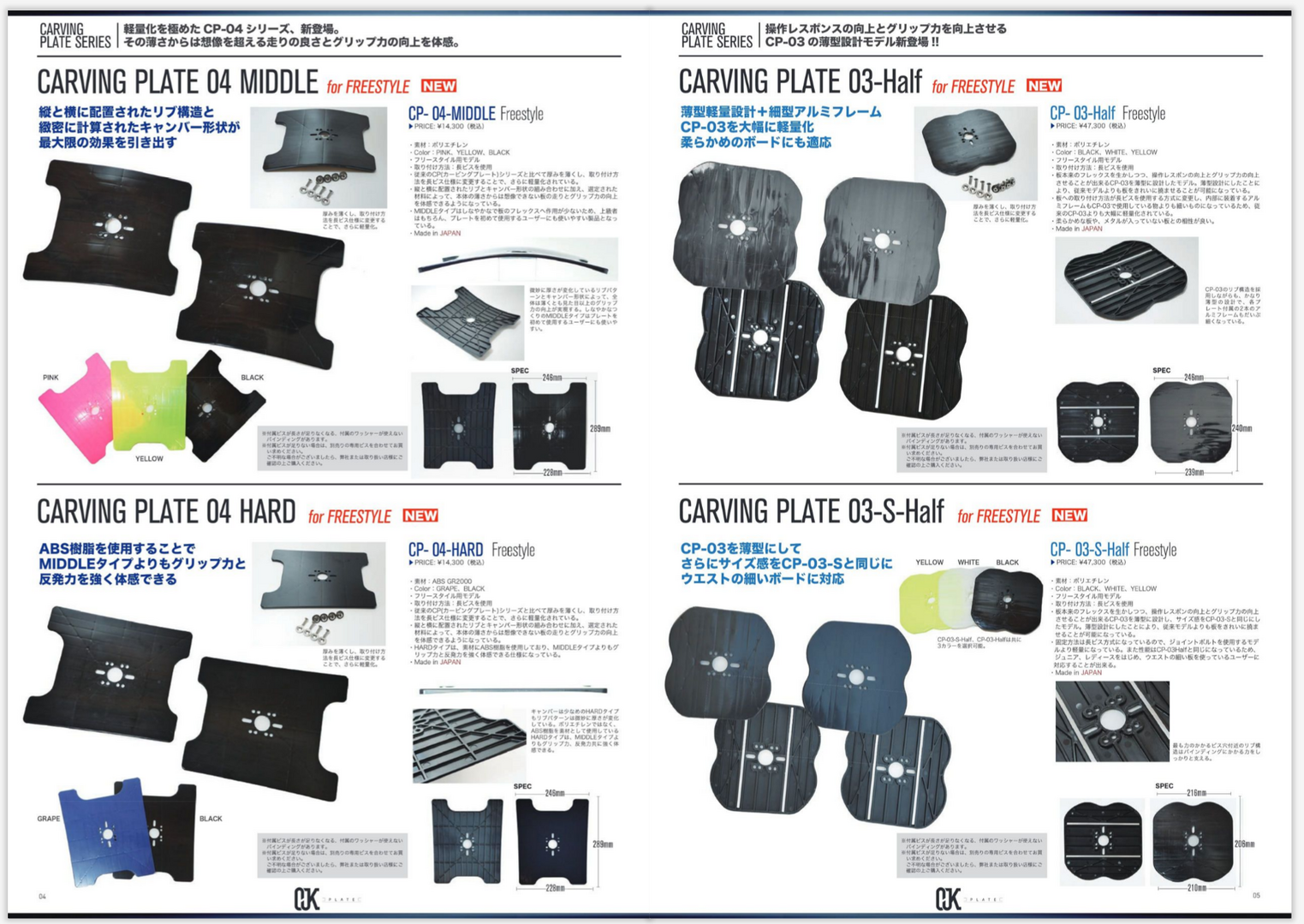
Thank you very much.
I completely agree that one of the main challenges of floating plate systems is the sense of disconnect between the rider and the board, the loss of freestyle feel due to the added weight and mechanical complexity, and ultimately the thought that “maybe I should just ride alpine gear instead.”
In Japan, freestyle plates that use various materials like resin or carbon to absorb impact while also reinforcing the board through their structure and rebound characteristics are gaining popularity—like the ones shown in the image.
At ALC Snowboards, where I belong, we’re currently developing our own freestyle plate. Our goal is to create something that sits between a resin-based plate and a traditional floating plate, combining the strengths of both systems.
This video (created by a Japanese snowboard shop) shows a plate called the M-FLEX, which was produced for about three years starting around 2010:
We believe there is real potential to bring this kind of design back with improvements to its mechanism and weight reduction, turning it into a modern freestyle plate.
Everyone in this forum is deeply passionate and knowledgeable, so if you have any ideas—especially for metal machined plates—we’d love to hear them and possibly bring them to life!
(As for carbon and resin systems… it’s probably tough to outperform Jasey in that area!)
