

Here's what google AI says...
carving angulation refers to a body positioning technique used to maintain balance and maximize edge grip during a carved turn, while boot-drag (or "boot out"/"toe/heel drag") is the undesirable contact of the rider's boots with the snow, which causes the edge to lose grip and the turn to wash out.
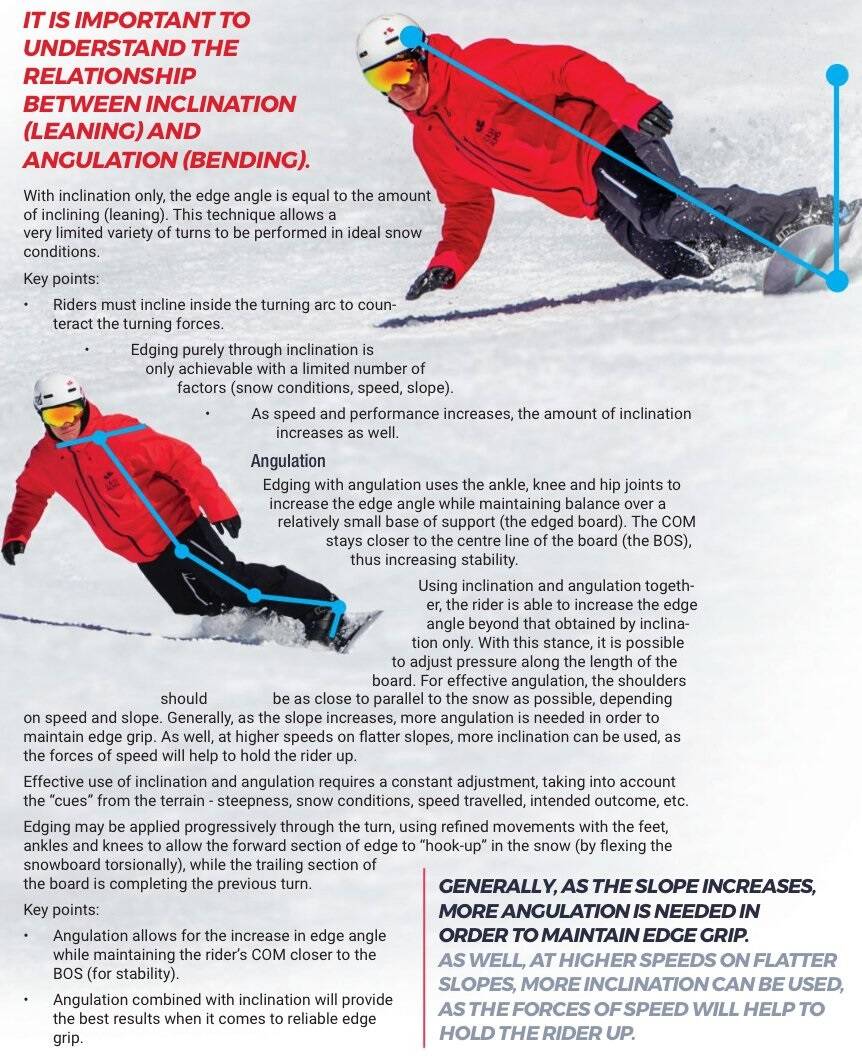
Carving AngulationAngulation is a crucial technique where the body creates an angle (laterally) between the lower legs and the upper torso. This allows the rider to tip the skis or snowboard onto a high edge angle (inclination) to engage the sidecut of the equipment, while keeping their center of mass balanced over the base of support (the outside ski or edge).Key aspects of angulation include:
- Balancing force: It helps counteract the strong centrifugal forces experienced in high-speed turns.
- Separation of upper and lower body: The lower body (ankles, knees, hips) moves further into the turn than the upper body.
- Increased edge angle: Proper angulation allows for a higher effective edge angle than simply leaning the whole body (pure inclination).
- Proper Angulation Prevents Boot-Drag: By bending at the hips and knees and flexing the ankles, a rider can bring their center of mass further into the turn while keeping their boots relatively clear of the snow surface. This means the equipment can be tipped to a very high edge angle, maximizing the carve, while the boots remain "above" the snow.
- Poor Technique Causes Boot-Drag: If a rider attempts to achieve a high edge angle by simply leaning their entire body into the turn (pure inclination) without sufficient angulation, their boots will quickly hit the snow, causing the drag.
- Equipment Considerations: Boot-drag can also be managed with equipment choices, such as using a wider snowboard, adjusting binding angles to a more positive-positive stance, or using binding risers, to increase the available lean angle before the boots touch.
Big White, BC, Canada
I can see if your weight is stacked (with angulation and not just inclination), you're less likely to slide-out/boot-out... but I think your boots are going to drag just the same. What am I missing?
Just so we're on the same page, I'm using the CASI terminology.
Big White, BC, Canada

but I think your boots are going to drag just the same. What am I missing?
I made a very confused face when I read the AI thing on how angulation reduces boot drag.
I just don’t understand how angulation can reduce boot drag at the same edge angles since your feet are attached to the board. I can see how you’re in a stronger position to counteract the boot drag though. Interested to hear an explanation if anyone has one. But my guess would be that this falls under the superstition category when it comes to technique
Dreaming about soft snow

ChatGPT tried to simplify things for my confused brain:
Angulation (what it is)
-
Tip the board with legs (ankles/knees/hips) while the torso stays more upright.
-
Gains edge grip, keeps balance over the outside edge, and drops boots less for the same edge angle.
Boot-out (what it is)
-
Boot/binding hits snow before the edge can hold—washout/skid, usually heel-side.
-
Technique changes when you hit the limit; geometry sets the limit.
What actually sets clearance
-
Board width vs boot size
-
Toe/heel overhang balance
-
Binding angles & stance
-
Risers/lift & forward-lean
Simple fixes (in order)
-
Balance overhang: ~1–1.5 cm past each edge.
• If you have offset discs (e.g., 3 mm), bias toward toe to help heel-side clearance. -
Angles: go more +/+ (e.g., +27/+9) vs deep duck to “narrow” the footprint.
-
Lift: small risers/gas pedal/heel lift; add forward-lean for heel-side support.
-
Width check: if >1.5–2 cm overhang on either side (centered), go wider waist—especially US 11+.
-
Quick tests:
• Credit-card scrape: tipped board—card should touch edge before boot.
• Phone photo: tip board; compare heel vs toe clearance and re-center with discs.
Together (why this works)
-
Angulation lets you carve deeper without dropping boots as low.
-
But if the board is too narrow, no technique stops boot-out—fix the geometry first.

Yeah... AI can't carve for shit!
We tried to train a bot with transcripts from all my instructional videos, all my snowboard related emails and posts from this forum. It's too dumb, pretty useless in its current form. We're still working on it.
Let's all agree to differentiate between "angulation" as CASI uses the term (to mean a separation between upper and lower body) and "edge angle", referring to the angle between the base of the board and the snow surface.
How about that? "Edge Angle".
I'm just slaying...
I came across this intresting discussion about angulation:
And they illustrated it really well. Take this pic:
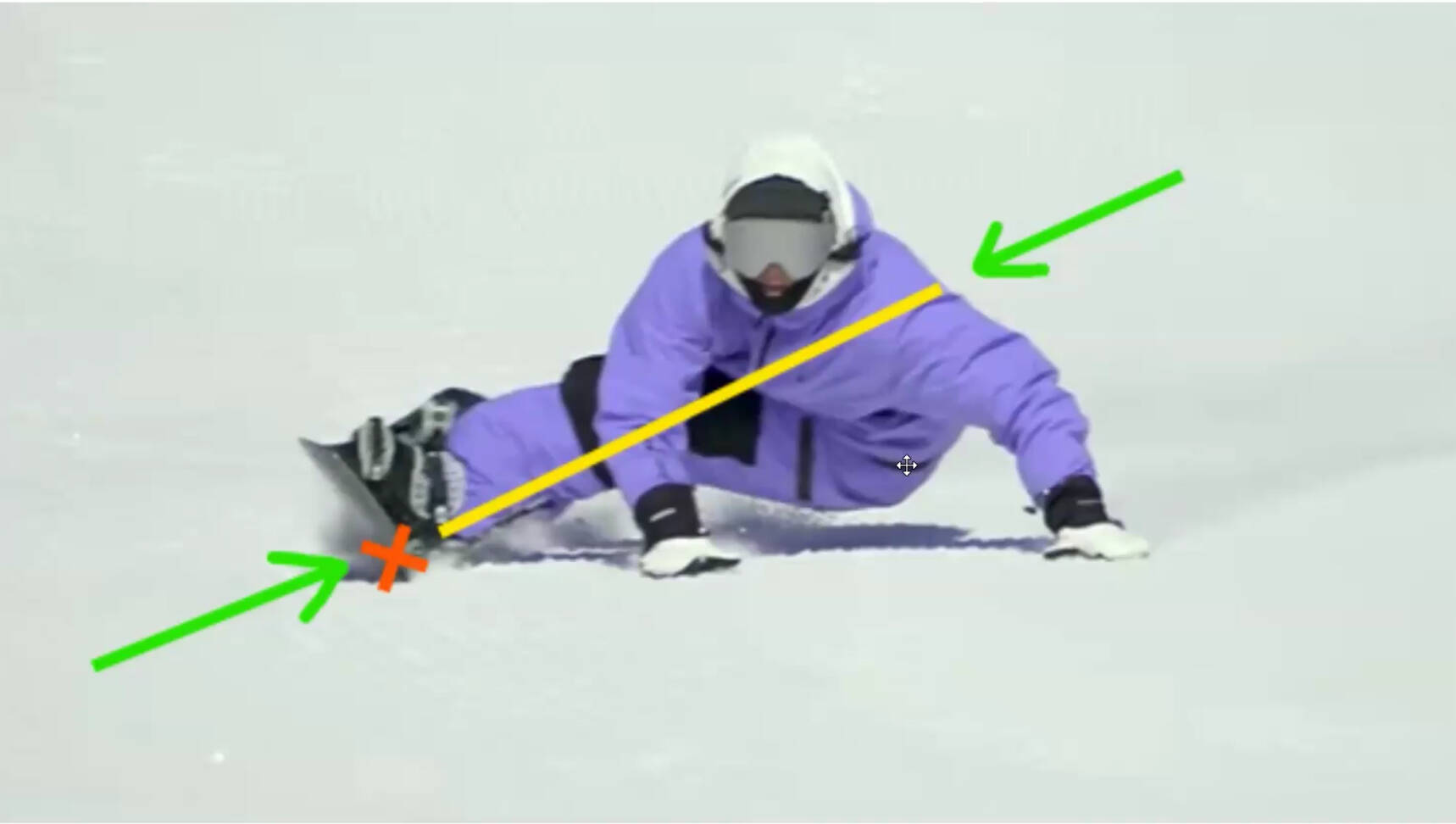
And rotate it so that the forces are vertical:
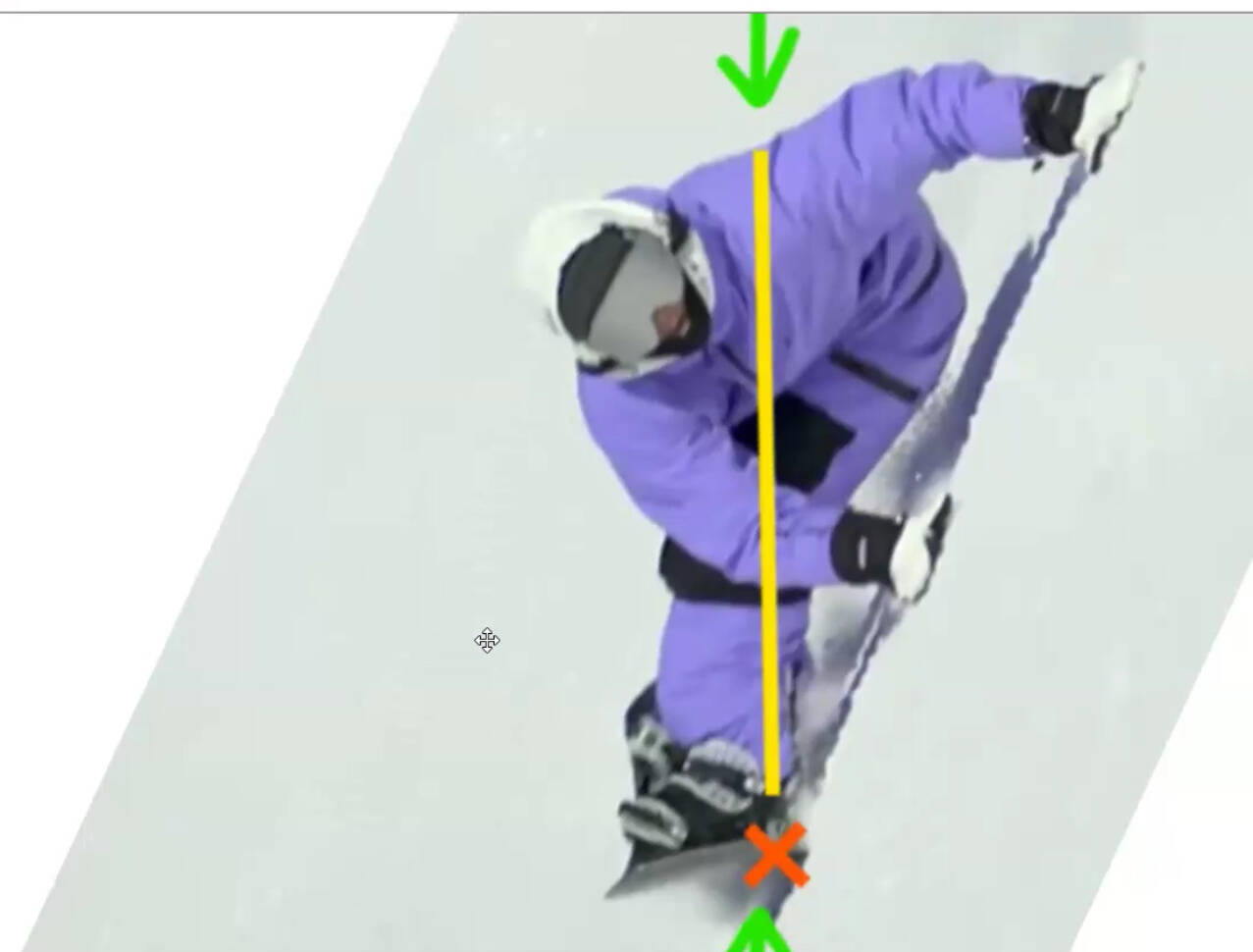
You can clearly see how his weight is stacked and balanced over the edge (in relation to the forces at play).
With only inclination his body would all be on the right side of that yellow line... and he'd probably skid out.
Big White, BC, Canada
With only inclination his body would all be on the right side of that yellow line... and he'd probably skid out.
That's a perfect demonstration! Thanks @board-doctor
I'm just slaying...

@board-doctor I was going to translate the new 2025 JSBA training handbook but couldn't find the time to finish it. The last page discusses angulation and inclination. I hope this helps. https://drive.google.com/file/d/1bIopIXZb8SUqE-mjlqybwKljM_2dUaQJ/view
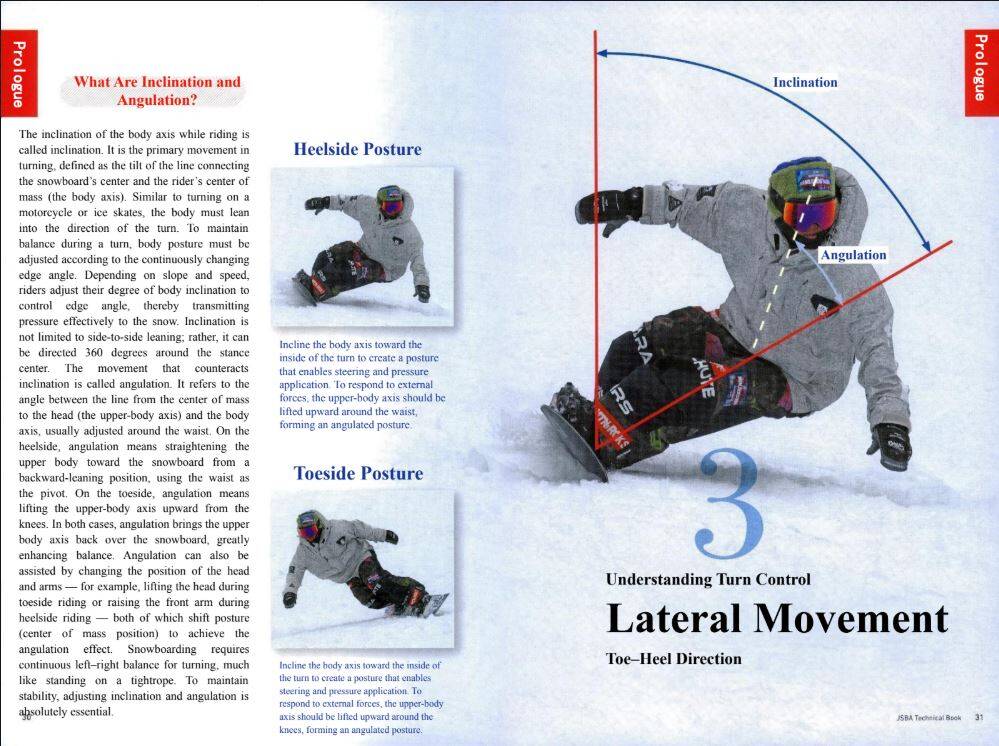
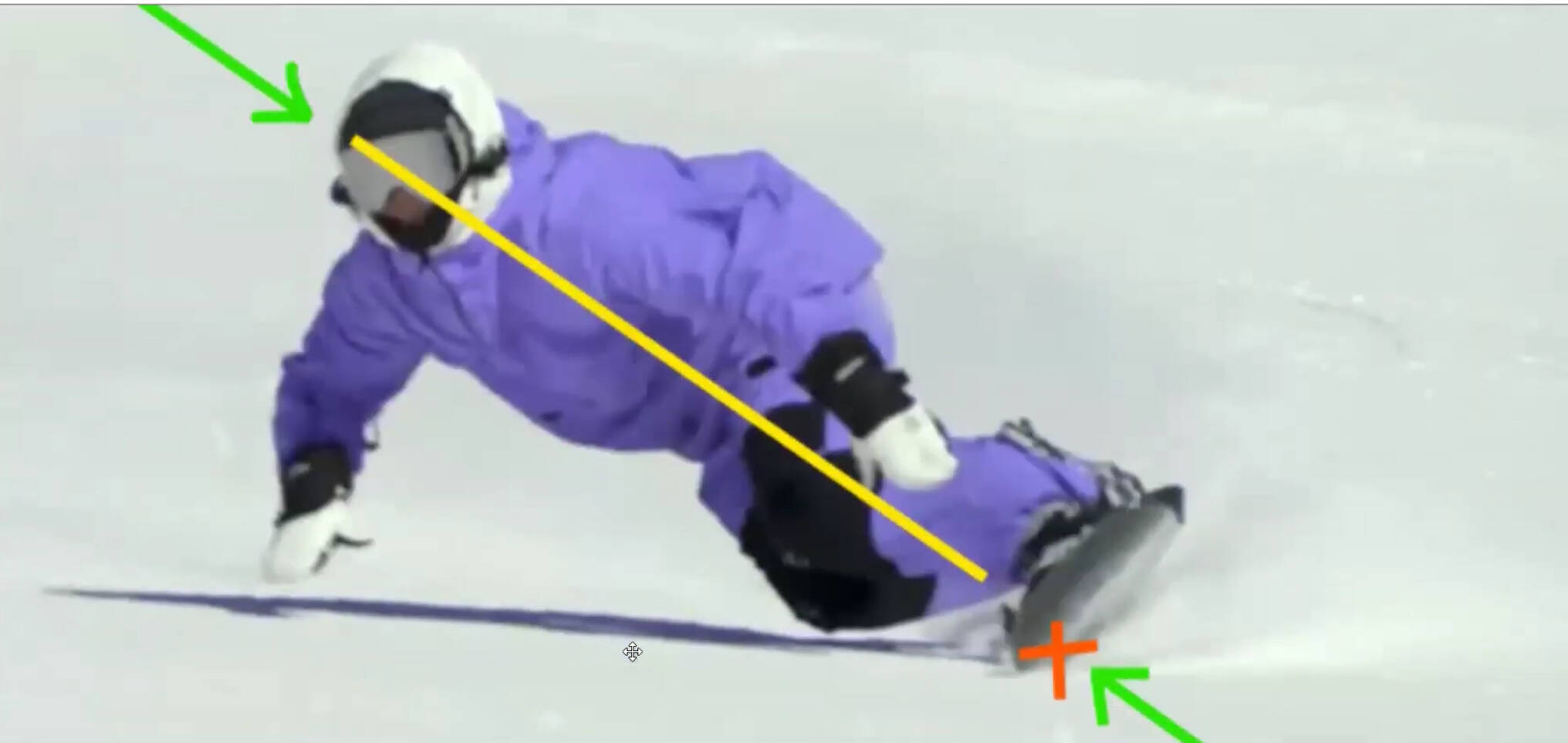
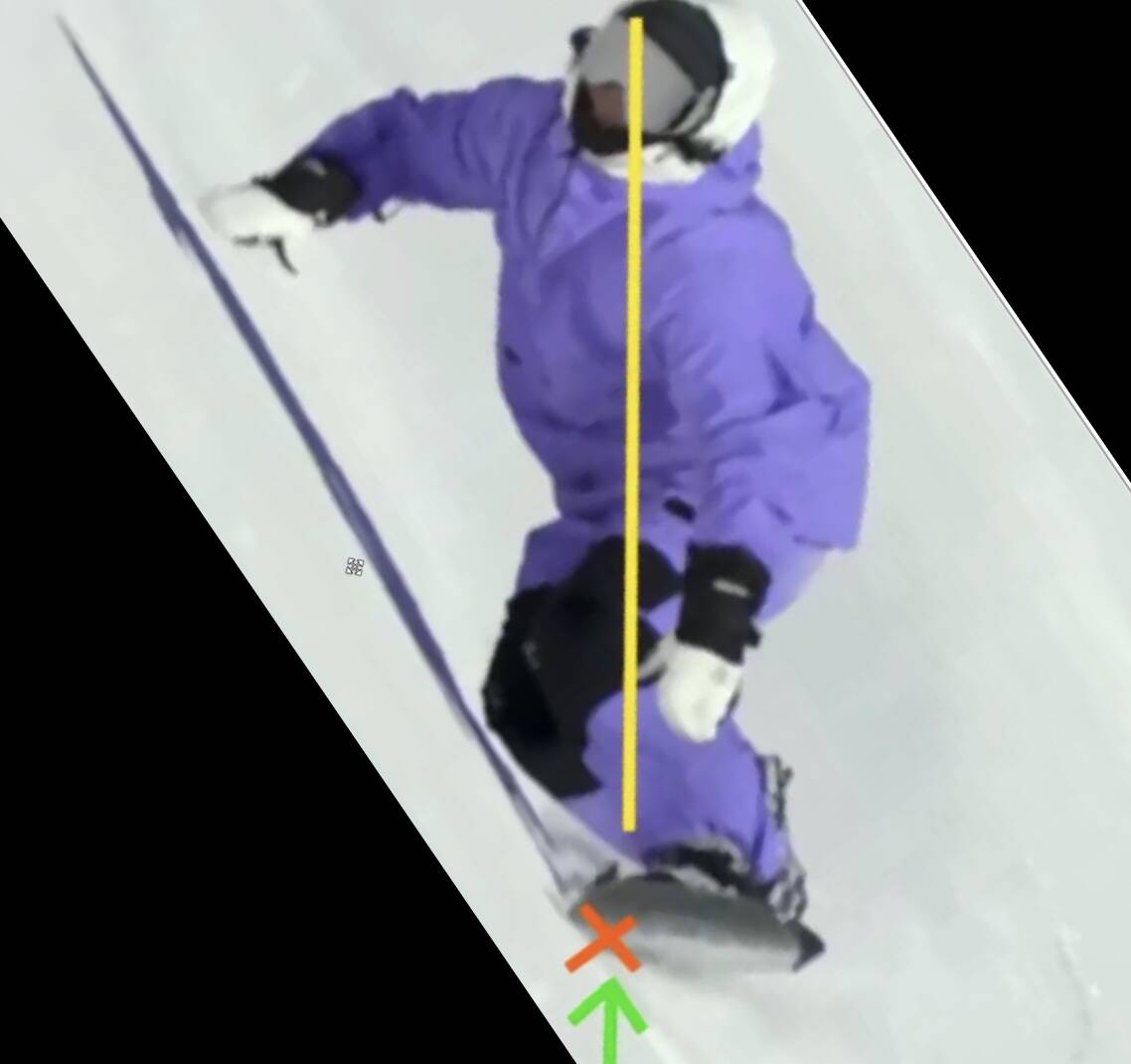
@board-doctor Quite interesting conversation, also interesting that he only had 58 subscribers (59 now with me). But also, I felt like they were maybe misusing some of the physics, e.g. talking about how the momentum change in a turn that "supports inclination", which is just a roundabout way to say that a turn redirects the velocity, no reason to multiply the velocity by the rider's mass.... in the end that may not be super important... I'll try to watch their other discussions and see if there are any other good ones.
Dreaming about soft snow
misusing some of the physics
😂 yeah, I’m a Physicist… I often “bite my tongue” as it’s just great to see people genuinely interested.
Big White, BC, Canada
deviated a bit from my original post.. but all good! Great convo
the concepts are starting to click for me as I'm new to carving
Posi-posi to get the body into a better position, hips rotated forward and 'stacked' over the edge of the board. That one photo when flipped vertical drills the point home very well!
Back on topic… carving coach.
I don’t know what @wild-cherry ’s schedule is like, but it’d be way easier to get to Revy than Fernie. I grew up watching Warren Miller films and always dreamed of Fernie, but I’ve been in Kelowna for 15 years and I’ve never made the trek.
Sun Peaks in Kamloops is having a carving skills camp. No idea what it’s like and it’s rather expensive…
https://snowperformance.com/event/sun-peaks-all-mountain-carve-skills-camp-2?fbclid=IwZXh0bgNhZW0CMTEAc3J0YwZhcHBfaWQPMTczODQ3NjQyNjcwMzcwAAEenR3jVR6esto-FQ_tKTfitYLUAFgzbcgmWGZb0liQTu7UuTPJRs5u9iyswUQ_aem_k_dozFYTrw5-ALEglB8x5Q
Big White, BC, Canada
@bigwasabi @rocketman69 I saw in the C4 thread...If I read correctly, we're all in similar boat: we're all 200+ lbs, 12+ Size boots, flow nx2 carbon fusion bindings, riding (really) positive angles? (Rocketman I think i saw you ride something like F49,B33 or something? AND, we all have the C4 (my new G4 is on the way!)
What are your experiences running very positive angles with the Flow NX2's as they don't have highback rotation? James noted he didn't have an issue but since you guys are running higher positive angles, any drawbacks or concerns?
Also a more general question to the group: if you made a transition to posi-posi at some point, did you start with 'mildly' positive angles and adjust upwards from there?
I mounted up my bindings on board on the carpet with something like F39,B18, and it simply feels 'natural' and little effort to get my hips in the 'face forward' position.
Is it nuts to start at those angles and adjust afterwards?

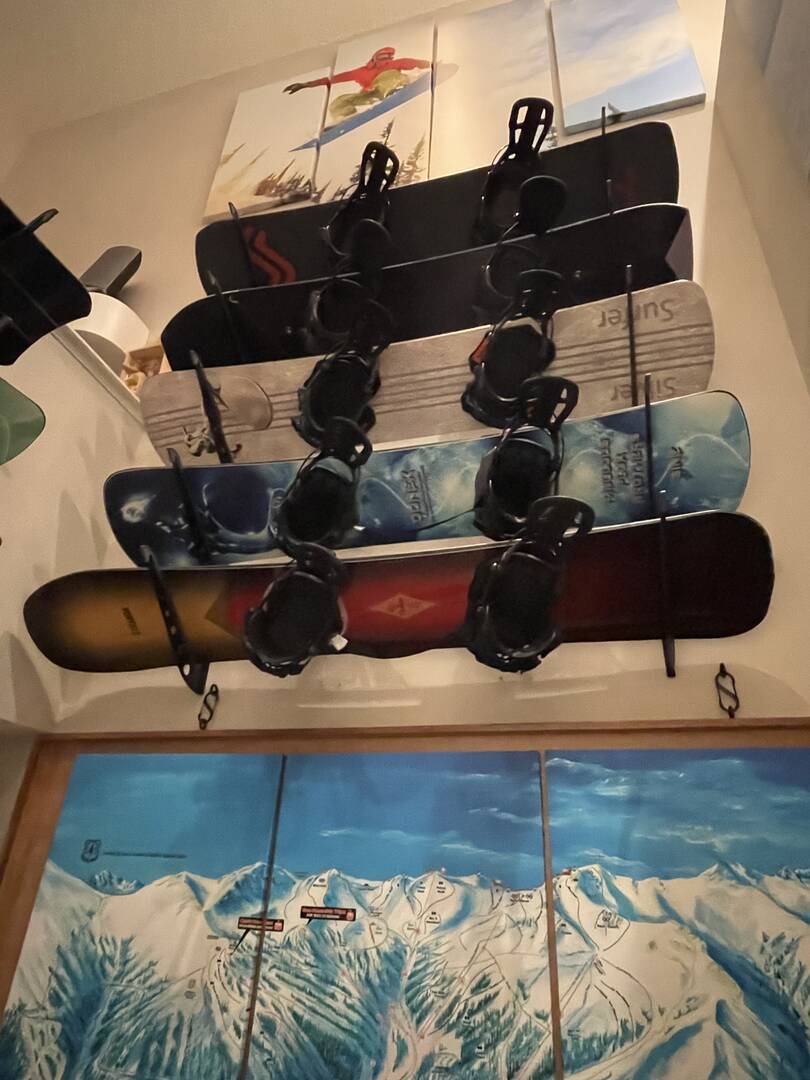
@carveaddict75 - I fell in love with Flow binding’s “set and forget” and slip in & close on the move design. I always got the stiffest one they had. A few generations ago the high back was a two-piece design with upper able rotate a few degrees - I couldn’t tell any difference. I love the NX2 Carbon bings - the high backs work great for carving high edge angles. I ride the NX2’s at F39/R30 with ~1/2” riser plates. Boot out is not an issue with my size 12 boots.
